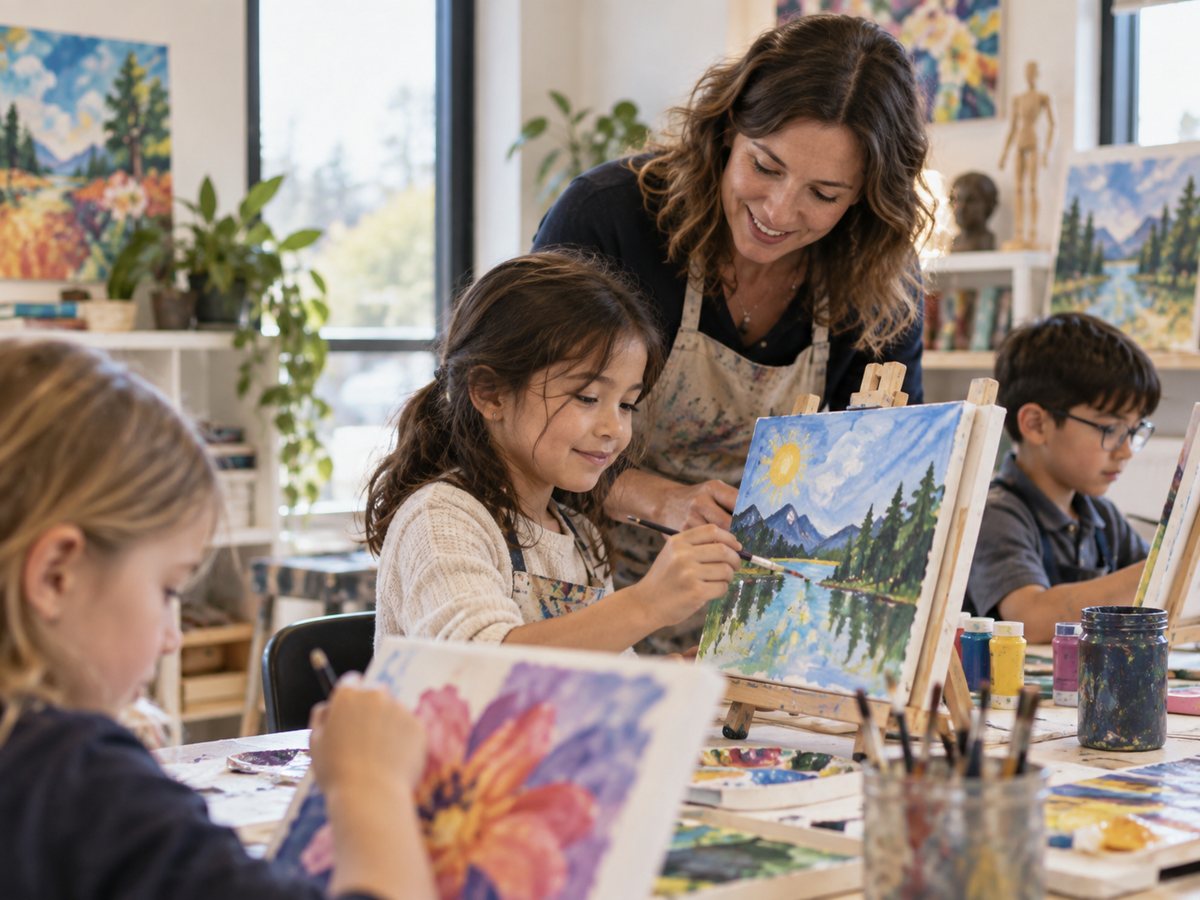
Children often develop a familiar symbol for a tree, eye, flower or person. Observation drawing asks a different question: what does this object actually look like right now?
Seeing Shapes Before Details
Complex objects become easier when students break them into simple forms. A cup can begin as a cylinder and oval; a bird can begin as two large masses plus directional lines.
Learning Proportion
Students compare width, height, angle and distance instead of guessing. This builds the habit of checking relationships between parts of the drawing.
Light and Shadow Add Form
Observation teaches children to look for the brightest area, darkest shadow and cast shadow rather than outlining everything equally.
Slowing Down Is a Skill
Looking before making a mark, correcting a shape and adjusting proportion all build patience and visual attention.
Observation Supports Imagination
Technical knowledge gives creative students more tools. Understanding how real objects work can make imaginary characters and scenes more convincing.