Parents ask us this all the time, and the honest answer is that it depends on the child and the instrument. Some kids are ready at five. Others do better at eight. Neither path is wrong.
Here is what we look for, instrument by instrument.
Age matters less than readiness
A child’s birthday tells you less than you might think. These signs tell you more:
- Focus. Can your child sit and work on one task for 15 to 20 minutes?
- Listening. Can they follow a two-step instruction, like “put your hands on your lap, then look at the board”?
- Letters and numbers. Do they know their alphabet and can they count to 10? Reading music builds on both.
- Interest. Does your child ask to play, or light up around instruments?
If you can answer yes to most of these, your child is likely ready. If not, wait a few months and try again. A child who starts a little later often catches up fast.
Ages 3 and 4
Most children at this age are not ready for formal private lessons. A 30-minute lesson is a long time for a preschooler, and fine motor skills are still developing.
You can still lay the groundwork at home. Sing together. Clap rhythms. Dance to music. Let your child bang on a drum or press keys on a piano. These games build a sense of beat and pitch, and they make lessons easier later.
Ages 5 and 6
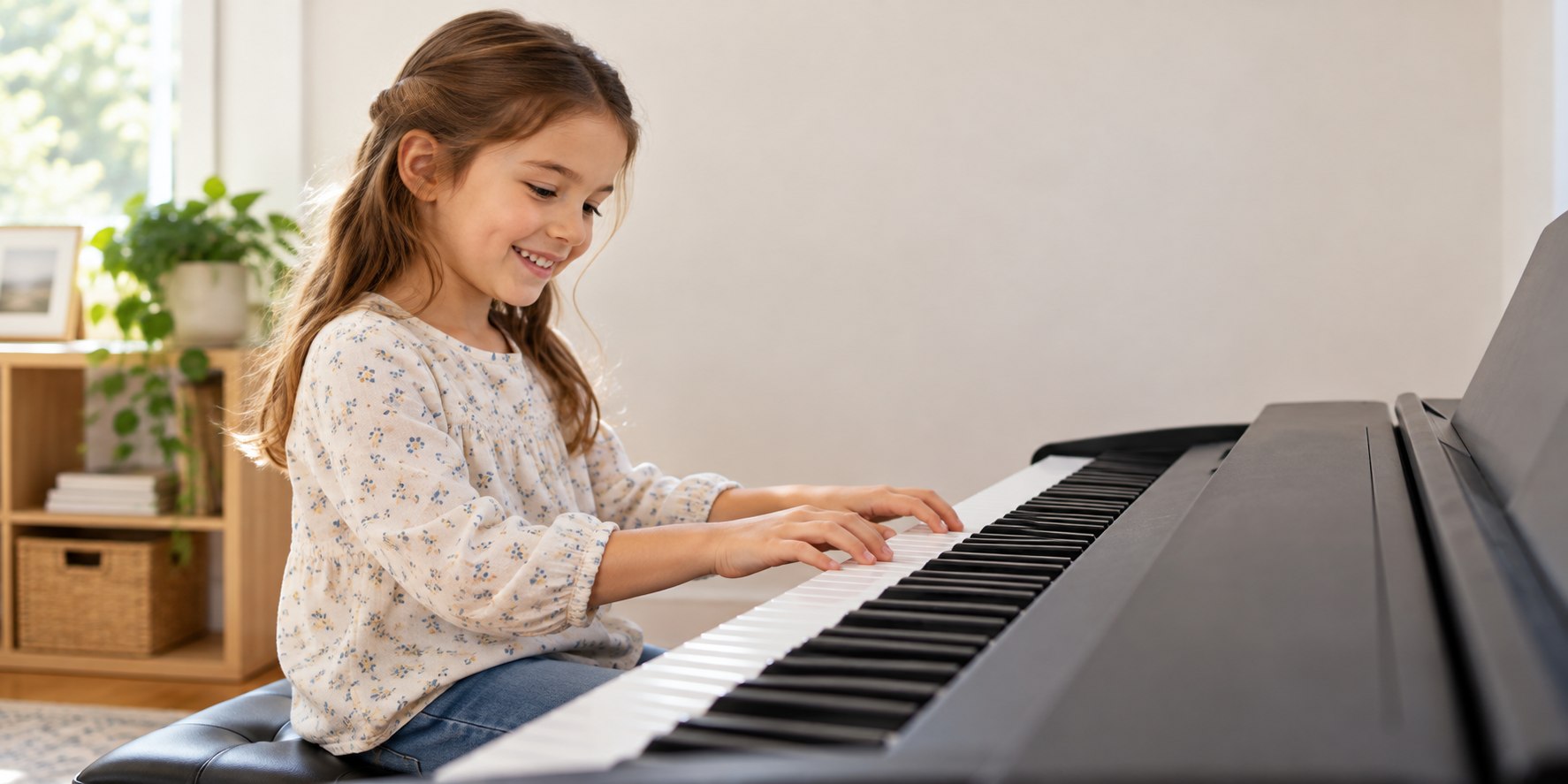
This is the most common starting age for piano, and a good one. Piano is a friendly first instrument. You press a key and a note comes out. Your child sees the notes laid out in order and can build from there.
Violin is another option at this age. Teachers can start some children at four or five, but the instrument demands patience. Violins come in small fractional sizes, so a young player can use one that fits.
Ages 7 and 8
Many instruments open up at this age.
Guitar
Small hands struggle with a full-size guitar. Around age seven or eight, most kids can reach the strings and press them down. A smaller nylon-string guitar is easier on the fingertips than steel strings. See our guitar lesson program.
Drums
A child needs to reach the pedals and sit with good posture. Most kids can do this at seven or eight. Drum lessons teach rhythm, reading and coordination, and they make a great second instrument for a piano student. Learn more about drum lessons.
Piano and violin
Starting here is fine. Older beginners often move quickly because they read and focus better.
Ages 9 and up
Voice lessons suit this age group. Children can sing earlier, and we encourage that, but formal technique work needs breath control and focus that develop over time. For many children, 9 or 10 is a good point to begin.
Teens also learn voice well. Voices change during puberty, so a good teacher will adjust the work as the voice changes.
What about teens and adults?
You can start at any age. Teens and adults learn differently from young children, but they have advantages. They understand why practice matters. They can read and focus longer. Many make steady progress from the first month.
If you are an adult who always wanted to play, you do not need to wait for your child to start first.
What about art?
Our weekly drawing and painting classes are for children, and they follow the same rule. Ask whether your child enjoys making things and can follow simple directions. Many kids join as early as age six. See our children’s art classes.
How to help your child succeed
Starting at the right age helps. These habits help more:
- Set a short, regular practice time. Ten minutes a day beats an hour on Saturday. Younger kids need less time.
- Sit in on the first lessons. You will learn what the teacher wants, and you can help at home.
- Praise effort, not talent. Say “I like how you kept going” instead of “you’re so good at this.”
- Give it time. The first few months can feel slow. Progress comes in steps, and it builds on itself.