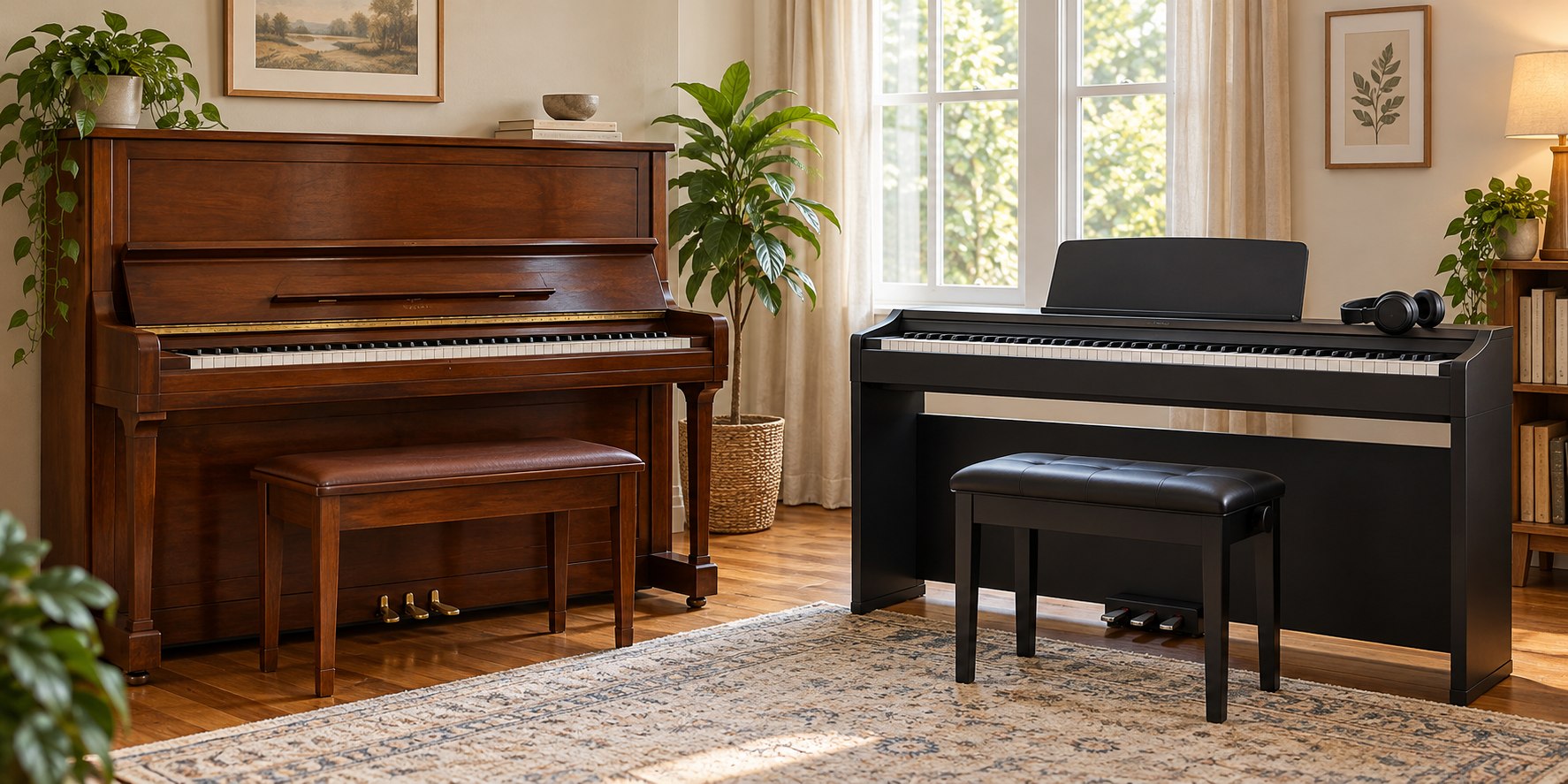
Parents ask us this in the first week of lessons: what should we buy to practise on at home? You have two good choices, an acoustic piano or a digital piano. The right one depends on your space, your budget and your home.
A keyboard is not a digital piano
Cheap keyboards have light, springy keys. Many have fewer than 88 keys. Some play every note at the same volume, no matter how hard you press.
A digital piano has weighted keys. They push back against your fingers like the keys on an acoustic piano. Press hard and the note gets louder. Press softly and it gets quieter.
Weighted keys help build finger strength. Light keys do not offer the same feel. A child who learns on a light keyboard may find an acoustic piano harder to play. When we say “digital piano” below, we mean one with weighted keys.
Acoustic piano
An acoustic piano has a responsive touch and a rich tone. The keys respond to small changes in how you play. The pedals work as they should, and the sound fills the room.
It has drawbacks, too:
- Cost. A used upright can cost $500 to $2,000 or more. A new one costs more.
- Moving. You need professional movers. A piano is heavy and needs a long stretch of wall.
- Tuning. Plan on one or two tunings a year. Each visit costs about $120 to $180.
- Volume. You can’t turn it down. Thin walls and late nights can make practice hard.
- Condition. Many free pianos online have cracked soundboards or loose tuning pins. Ask a technician to check a used piano before you buy it.
Digital piano
A digital piano fits many homes:
- Headphones. Your child can practise at 7 a.m. or 9:30 p.m. without anyone else hearing a note.
- No tuning. It sounds the same in year five as it does on day one.
- Size. Many models fit in a small room or condo.
- Price. A good beginner model costs about $700 to $1,500. Used ones cost less.
- Features. Most have a metronome and a recorder. Kids may enjoy hearing themselves play back.
It has drawbacks, too. The touch and tone do not match a top acoustic piano. Cheaper models can feel limited as a student improves. Electronics can wear out, so a digital piano may not last as long as a well-kept acoustic.
What to check when you shop
Look for these five things:
- 88 keys. This is a full-size piano. Smaller ones can run out of notes quickly.
- Weighted keys. Look for “graded hammer action” or “weighted action” in the specs. If the listing does not say, assume the keys are light.
- Touch sensitivity. Soft playing should sound soft. Hard playing should sound loud.
- A sustain pedal. Get a real pedal. The small switch pedals that come with cheap keyboards can slide across the floor.
- A stand and bench. A wobbly stand and a dining chair make good posture harder. Choose a bench that fits your child’s height.
Try the piano in a store if you can. Play a soft note and a loud one. Your hands will tell you what the spec sheet can’t.
What we suggest
Most beginners should start with a weighted, 88-key digital piano. It costs less, needs no tuning and lets your child practise at any hour. It will serve them well for the first few years.
Choose an acoustic if you have the space, the budget and a home where noise is not a problem. Have a technician inspect any used piano first.
If your child plans to work toward higher Royal Conservatory (RCM) levels, an acoustic piano matters more over time. Many students practise on a digital piano at home and play an acoustic at lessons. That works. Ask your teacher what your child needs at each level. You can also read about piano lessons in Mississauga and what happens during the first month of lessons.
Mistakes to avoid
- Buying a small keyboard to “try it out.” You will likely pay twice, and bad habits can be hard to fix.
- Spending a lot before the first lesson. Give it a few weeks. Let your teacher watch your child play and offer advice.
- Taking a free piano without a check. Moving one that cannot hold a tune costs money and gives you a very large shelf.