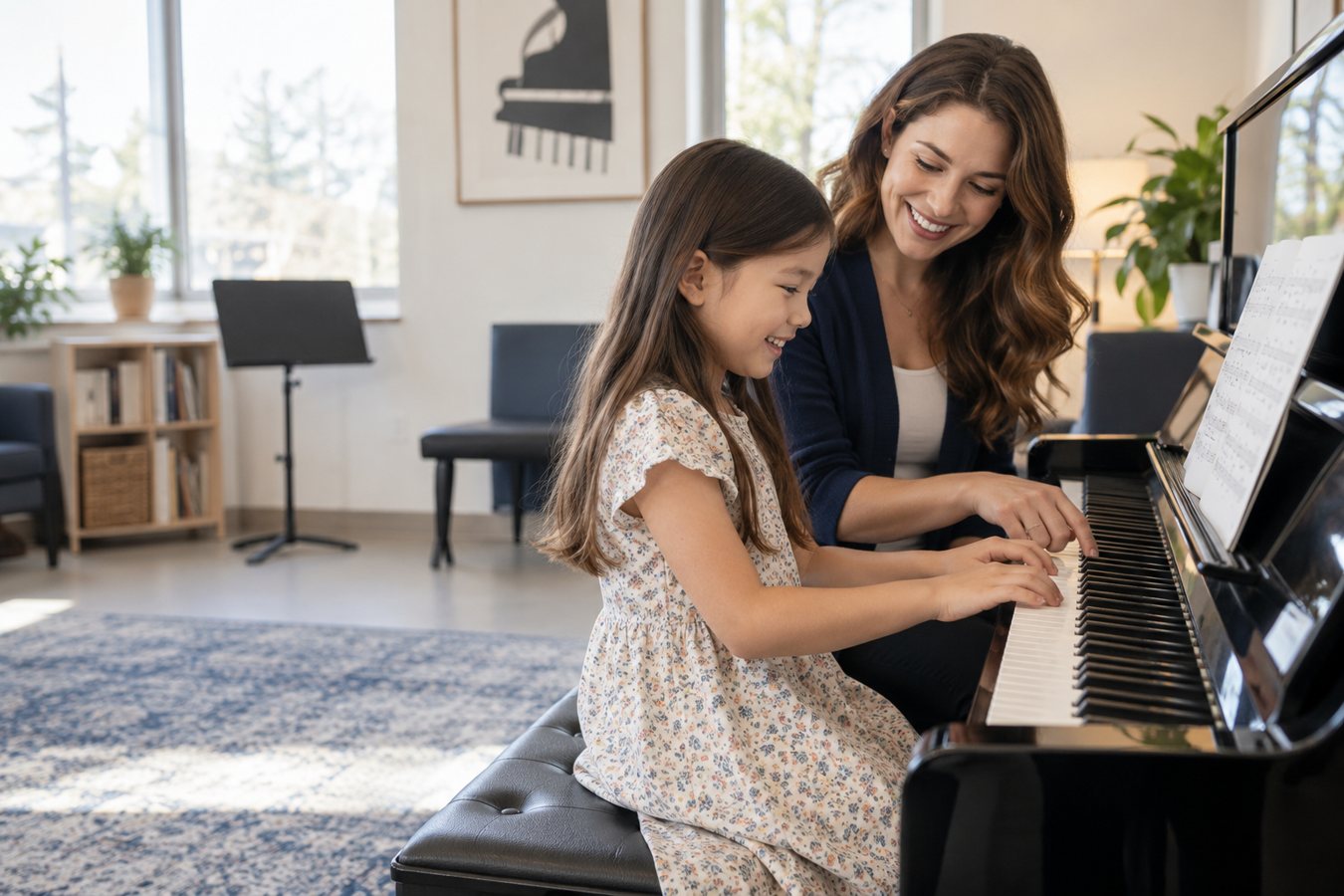
The first month of piano lessons is less about racing through songs and more about learning how the instrument works, how music is organized and how to practise without feeling lost.
The First Lesson: Making the Keyboard Less Mysterious
Beginners may start with groups of black keys, high and low sounds, finger numbers, posture and simple rhythm patterns. The teacher is also learning how the student responds to instructions and which explanation style works best.
Weeks Two and Three: Connecting Several Skills
Students begin combining notes, fingers and rhythm. A short melody can require the child to read a symbol, find a key, choose a finger and play at the right time—all at once.
When Does Reading Start?
Reading can begin immediately, but it does not have to mean memorizing every note at once. Students can first notice whether notes move up, down or repeat, then gradually attach names and positions.
Will They Play a Song?
Usually. Beginner pieces are intentionally short, but finishing recognizable music gives the student a useful sense of progress.
What Should Home Practice Look Like?
Short, regular sessions are usually more productive than an occasional long practice. A teacher may ask the student to repeat one small section, clap a rhythm, review a few notes or check finger placement.
What If One Skill Is Slower?
That is normal. Some students remember melodies quickly but need more time to read. Others read carefully but develop coordination more gradually. Private lessons make it possible to adjust.